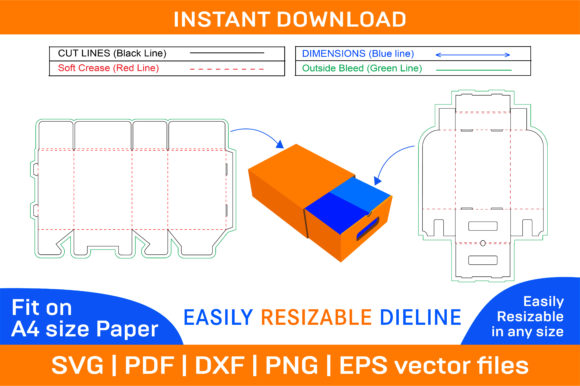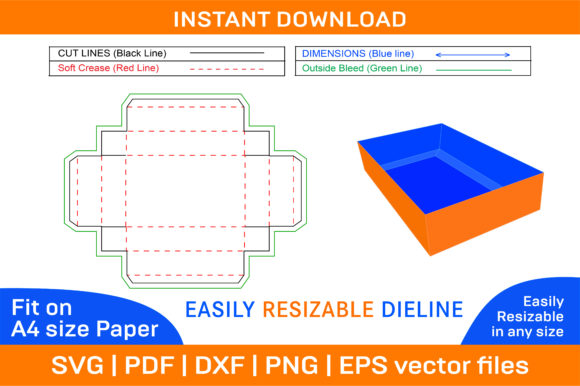
Tray Assemble Standard Box Dieline: A Practical Guide for Custom Box Creation
The Tray Assemble Standard Box Dieline is a versatile tool for individuals and businesses looking to create custom paper boxes with precision and ease. Whether you're designing packaging for a small product, organizing items in your home, or planning a creative project, this dieline offers a structured yet flexible approach to box assembly. This article explores what the Tray Assemble Standard Box Dieline entails, how it compares to similar templates, its strengths and limitations, and when it might be the best choice for your needs.
What Is a Tray Assemble Standard Box Dieline?
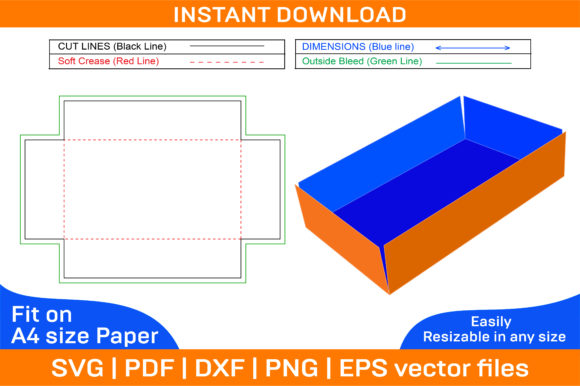
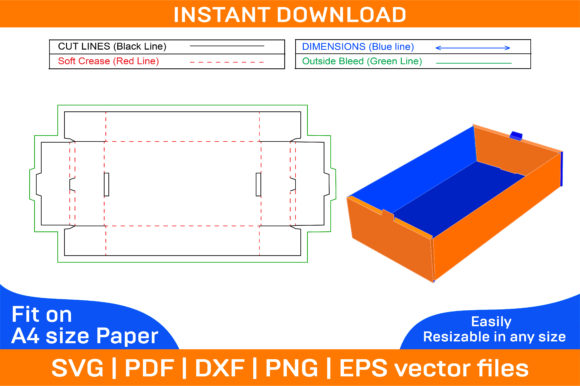
A Tray Assemble Standard Box Dieline is essentially a pre-designed layout that outlines the dimensions, folds, and cut lines of a box. It serves as a blueprint for assembling a tray-style box from flat materials like cardstock or cardboard. The template ensures accurate folding and tucking, making it ideal for users who want a clean, professional finish without advanced design skills.
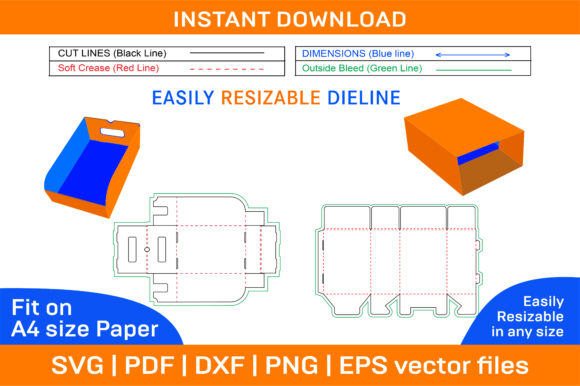
This particular dieline includes multiple file formats such as SVG, PDF, EPS, DXF, AI, and PNG, which allows compatibility across various software platforms. The inclusion of both color and blank templates gives creators the freedom to print on any colored paper or add their own designs and branding. Additionally, all files are vector-based, meaning they retain high quality at any size and can be scaled without loss of detail. These features make the Tray Assemble Standard Box Dieline suitable for both personal and commercial use cases.
Key Features and Benefits
- Instant Download: After purchase, the ZIP archive containing all the necessary files is available for immediate download, enabling quick start to your box-making projects.
- High-Resolution Quality: Files are created at 300 dpi, ensuring sharp and clear prints regardless of the printing method used.
- Customization Options: With the blank template, you can personalize the box using your preferred colors, logos, or images. This makes it a great option for themed packaging or promotional items.
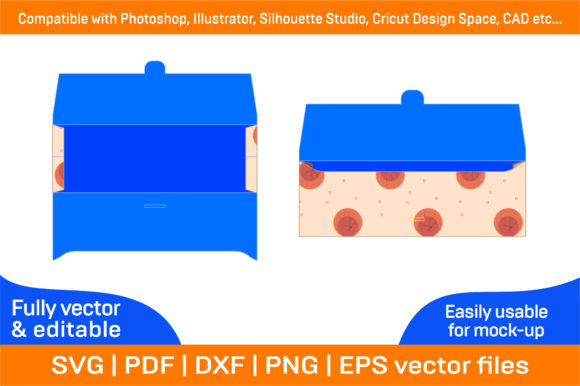
- Compatibility: The dieline works seamlessly with design software such as Adobe Photoshop, Illustrator, Silhouette Studio, Cricut Design Space, and AutoCAD. This flexibility supports both digital editing and cutting machine integration.
- Scalable Vector Files: Since the design is based on vector graphics, it adapts easily to different sizes while maintaining crisp edges and structural integrity.
Strengths of Using a Tray Assemble Standard Box Dieline
One of the main advantages of the Tray Assemble Standard Box Dieline is its simplicity. Unlike more complex box designs, this template focuses on a standard tray structure—ideal for items that require a stable base but not a full enclosure. It’s especially useful for products such as candles, jewelry, food samples, or other retail goods where presentation is key.
Another strength lies in the variety of included file types. For example, SVG files are widely supported by digital cutting tools, allowing for precise cuts using machines like the Cricut or Silhouette. Meanwhile, AI and EPS files cater to designers working in Adobe Illustrator or other vector-based programs, offering full editability for those who want to tweak measurements or aesthetics before production.
The availability of a blank template also sets it apart from many alternatives. While some dielines come pre-printed with specific designs or branding, this version lets you take control of the visual elements. You can print it on white, kraft, or colored paper depending on your desired look, or even apply textures and finishes for added appeal.
Comparing Tray Assemble Standard Box Dieline to Other Packaging Templates
When evaluating packaging options, it's important to consider how the Tray Assemble Standard Box Dieline stacks up against other common types of box templates. Here’s a practical comparison:
Foldable Box Templates
Many foldable box templates include top flaps or fully enclosed structures. In contrast, the Tray Assemble variant offers a simpler form—just a base and sides—with no lid. This makes it less suitable for protecting fragile items during transport but better suited for countertop displays or gift trays where visibility is important.
Printable Box Templates
There are numerous printable box templates available online, but not all include vector files or multi-format support. Some may only provide PDFs, limiting scalability and customization. The Tray Assemble Standard Box Dieline stands out by providing scalable vector files, which are essential for professional-grade results, especially when resizing or adjusting for different uses.
3D Box Design Software
While there are several 3D box design tools that allow users to model packaging digitally, these often require learning curves and subscription costs. The Tray Assemble Standard Box Dieline provides a ready-to-use solution that bypasses the need for 3D modeling expertise. If you already have a clear idea of the box style you want, this template can save time and effort compared to building one from scratch in design software.
Paper Box vs. Cardboard Box Templates
Some templates specify materials, such as thick corrugated cardboard for heavy-duty use. However, the Tray Assemble Standard Box Dieline is designed for general-purpose paper boxes, making it more accessible for hobbyists and small-scale producers. It’s not recommended for extremely heavy items, but it performs well for lightweight objects that benefit from a neat and elegant presentation.
Best-Fit Use Cases for Tray Assemble Standard Box Dieline
Here are scenarios where the Tray Assemble Standard Box Dieline is particularly effective:
- Retail Packaging: Ideal for displaying small products like cosmetics, stationery, or gourmet snacks in stores or at pop-up events.
- Event Decorations: Can be used to create custom gift boxes, sample holders, or display trays for weddings, parties, or brand activations.
- Craft Projects: Perfect for DIY enthusiasts who enjoy customizing boxes with unique patterns, artwork, or text.
- Educational Purposes: Teachers or students can use the template to explore geometry, design principles, or packaging concepts hands-on.
- Prototyping: Businesses can quickly produce mockups of their packaging to test fit, function, and appearance before mass production.
Its adaptability to different printing mediums and software also makes it a good candidate for print-at-home or small-batch manufacturing scenarios, where access to professional printing equipment may be limited.
Limitations and Tradeoffs
Despite its benefits, the Tray Assemble Standard Box Dieline has certain limitations that users should consider:
- Lack of Lid: The tray-style design doesn’t include a lid, so it’s not appropriate for items requiring protection from dust, moisture, or physical damage.
- Manual Assembly Required: Unlike die-cut boxes produced in industrial settings, this template requires manual folding and gluing. While this is manageable for small quantities, it may not be efficient for large-volume production.
- No Built-In Branding: The blank nature of the template means you must handle all branding and design work yourself. This can be an advantage for creativity but a drawback if you prefer a more plug-and-play solution.
Additionally, although the template is compatible with most major design tools, users unfamiliar with these platforms may need to invest time in learning how to properly scale and adjust the files. Beginners might find the process slightly overwhelming unless they’re working with user-friendly software or have prior experience with digital design and cutting tools.
When to Choose Tray Assemble Standard Box Dieline
You should consider using the Tray Assemble Standard Box Dieline if:
- You want a simple, elegant box for showcasing rather than enclosing items.
- You plan to customize the box with your own theme, colors, or branding.
- You need compatibility with design and cutting software for easy adjustments and production.
- Your project requires high-quality prints and the ability to resize the box as needed.
On the other hand, if your needs involve:
- Protective packaging for fragile or heavy items,
- Mass production with automated assembly,
- Pre-branded templates with minimal customization,
- Or fully enclosed box designs with lids and closures,
Alternatives to Consider
If the Tray Assemble Standard Box Dieline doesn’t meet your requirements, here are some alternatives worth exploring:
Box Sets with Lids
These templates are ideal when you need complete coverage and protection. They usually include separate pieces for the base and lid, along with scoring lines for smooth folding. However, they tend to be more complex and may require additional time and effort to assemble.
Modular Box Templates
Designed for stacking or nesting, modular templates are excellent for storage solutions or uniform packaging. They often feature interlocking tabs and reinforced corners, but they may not be as customizable or easy to modify as the Tray Assemble version.
Pre-Cut Box Kits
For those who prefer convenience over customization, pre-cut kits offer ready-made components that snap together. While faster to assemble, they lack the flexibility of editable templates and are typically more expensive in the long run.
Commercial Packaging Services
For businesses needing large volumes or specialized materials, outsourcing to a commercial printer or packaging company could be a better fit. These services often provide tailored designs and durable materials but may require higher upfront costs and longer lead times.
Practical Tips for Getting Started
To get the most out of the Tray Assemble Standard Box Dieline, follow these steps:
- Choose Your Software: Open the template in your preferred design program (e.g., Adobe Illustrator or Photoshop) to begin customizing.
- Edit Dimensions as Needed: Adjust the vector elements to match the size of your item. Ensure all tab lengths and fold lines remain proportionate to maintain structural stability.
- Design Your Layout: Add text, logos, or artwork directly onto the template. Use bleed areas carefully to avoid gaps after cutting.
- Print and Cut: Print the template on A4 or compatible paper, then use a cutting machine or scissors to prepare the box components.
- Assemble with Care: Fold along scored lines and glue tabs precisely. Allow the adhesive to dry completely for a sturdy final product.
For those new to the process, practicing with the blank template first can help build confidence before adding color or images. Many users also recommend testing the box with sample content to ensure proper fit and functionality before finalizing the design.
Final Thoughts
The Tray Assemble Standard Box Dieline is a valuable resource for anyone seeking to create custom, high-quality paper boxes with a focus on presentation and flexibility. Its compatibility with major design tools, support for multiple file formats, and emphasis on user customization make it a strong contender among DIY and semi-professional packaging options.
However, it's important to weigh its suitability against your specific goals. If your project demands durability, automation, or a fully enclosed structure, you may need to look elsewhere. But for creative, lightweight, and visually appealing tray-style boxes, the Tray Assemble Standard Box Dieline is a solid choice that balances usability, cost-effectiveness, and adaptability.
Always remember to review the template instructions and test your design before committing to a larger production run. And if you encounter any issues or need further guidance, reach out to the provider for assistance—they’re there to help ensure your project turns out exactly as envisioned.